
“I feel like I’m winning and drowning at the same time.”
A participant said that in one of our recent Time Leader Labs on AI, and the conversation paused while heads nodded. I hear some version of it everywhere now, from Lab participants, from the leaders I coach, and from my own team: Put their words together, and it sounds like this:
I’m working harder than I ever have. I like this work. But sometimes I feel like, man, I’m so tired. “AI has warped my expectations of how long things are supposed to take.I get into it and I lose track of time–pulled into more and more iterations.” All the reports promised 25% more productivity…but where is that savings? My team and I are 25% more busy than we were before using these tools.
AI is helping people produce more, faster, and better than they ever have. It is also leaving them more spent than they’ve ever been, in a way that feels new. As one of my clients put it: Not tired the way you are after a long day of meetings. Depleted. Like I'd run a cognitive sprint I hadn't trained for. And most people can’t quite say why.
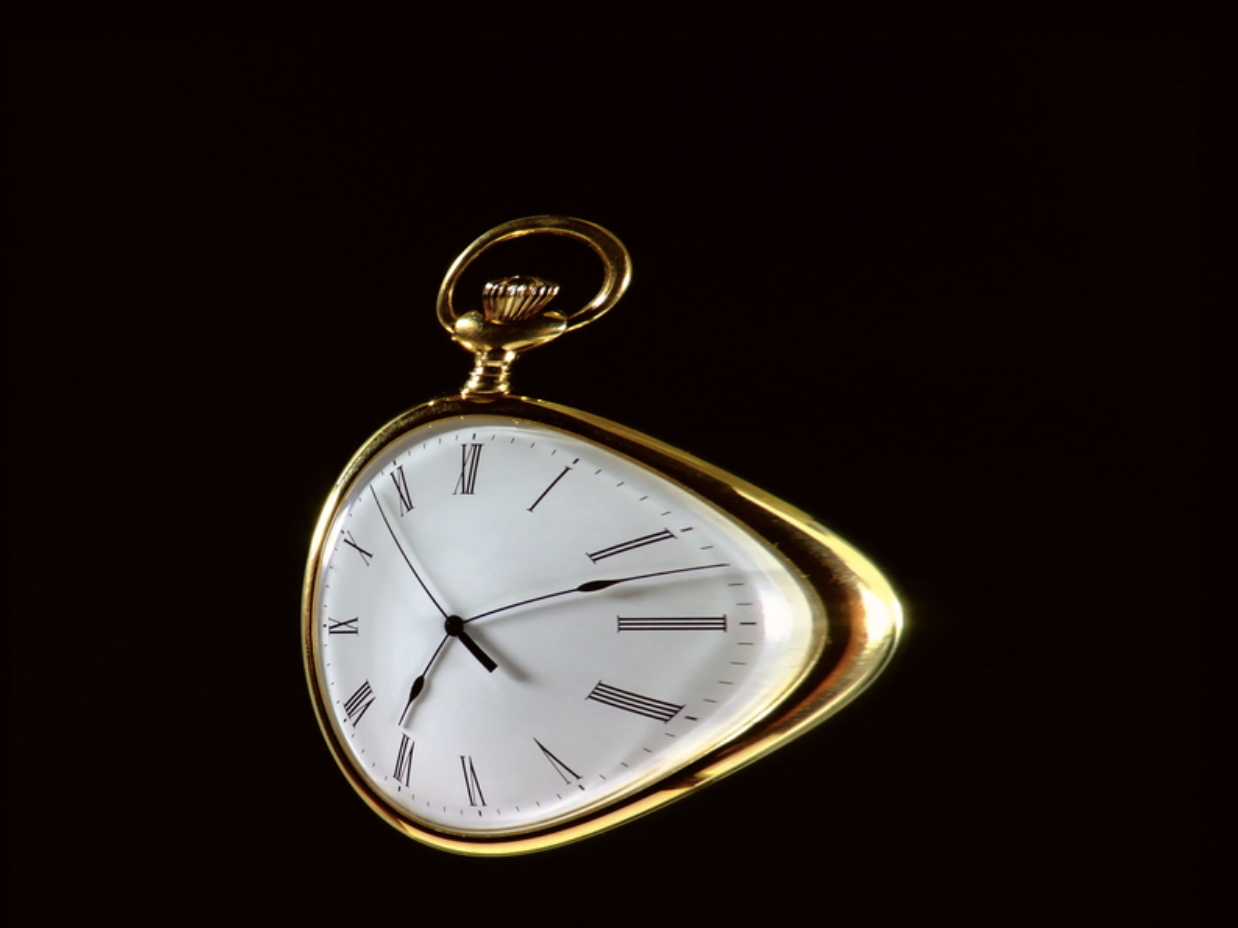
This collective experience points to something I’ve been observing for years: technology doesn't just change how fast we work. It changes the entire texture of time—how it feels, how it moves, what it demands, what it gives back.
We've Been Here Before
When FedEx launched overnight delivery, it was revolutionary. You could write a proposal today and your client would have it in their hands tomorrow. That wasn't just convenient—it changed the rhythm of work. The breathing space between major correspondences compressed. What had taken a week now took one day.
Then email arrived, and it happened again. We went from overnight delivery to instant delivery. The waiting time between sending and receiving—time you used to fill with other work, with thinking, with simply living—vanished. Many people found it thrilling. Many found it destabilizing. Most found it both.
Each technology that promised to save time also introduced a new kind of demand. And we adapted—eventually. We built new norms, new protocols, new boundaries. We figured out that not every email needed an immediate response. We learned to use the speed without being consumed by it.
We're in that figuring-out period again. Except this time, the compression is not just faster communication. It is faster thinking, meatier creation, more polished output. We are moving at 8,000 mph on a train that was designed for 50. And nobody's built the rest stops yet.
What AI Is Actually Doing to Your Days
Here is what I'm hearing from leaders across industries right now: the work is better, faster, and more expansive than it has ever been. And they are exhausted in a way they cannot fully explain to anyone outside their role.
The explanation is this: AI has compressed the duration of work without reducing its cognitive weight. A strategic document that once took three weeks now takes three hours. But the thinking required to review, guide, pressure-test, and integrate that document still demands the same depth of judgment it always did. We've shortened the production time. We haven't shortened the understanding time.
This creates a temporal paradox: more is possible, faster than ever, but the cognitive recovery those outputs demand hasn't changed. You finish a high-output AI session and feel the same kind of spent you'd feel after a rigorous board meeting—because your brain worked just as hard. It just worked on different things.
There's also what I've started calling the Implementation Gap: when AI accelerates the production of strategic insights, decisions, and plans faster than human organizations can absorb and act on them, you get a growing pile of excellent, half-implemented work. The bottleneck is no longer the thinking. It's the absorbing.
What Time Leadership Looks Like Now
None of this means we should slow down. That is not a viable option and not the point. The point is that we need to design our time differently to match what AI actually changes—not just add AI on top of how we already work.
Three things I am watching the best leaders do right now:
They schedule for depth, not just output. AI sessions that involve real strategic thinking go on the calendar like thinking time always has—with buffer before and recovery after. Not back-to-back.
They protect their first thinking. Before an AI tool enters any significant project, they spend uninterrupted time with the problem themselves. This isn't inefficiency. It's what prevents you from becoming a supervisor of your own judgment.
They are deliberately building implementation capacity alongside output capacity. Having a brilliant AI-assisted strategy that sits at 60% implementation is not success. The leaders who are thriving are the ones managing the gap.
The rhythm of time is not gone. It has shifted. And the leaders who learn to move with that shift—rather than simply accelerating into it—will be the ones who sustain their depth, their judgment, and their stamina over the long arc.
There’s one more shift worth naming, and I’ll come back to it soon. Every time-saving technology before this one came with a promise of more leisure, and every time, we poured the saved time back into work. AI gives us a real chance to do it differently: to reinvest some of what it saves into renewal, thinking time, and human connection, which happen to be exactly what make us better at using it.
That is what Time Leadership has always been about. It just matters more now than it ever has.